Supply chains are under constant pressure from rising customer expectations, global disruptions, cost volatility, and sustainability demands. In this complex environment, incremental improvements are no longer sufficient. Artificial intelligence (AI) has emerged as a transformative capability that enables organizations to predict disruptions, optimize decisions, automate processes, and operate with unprecedented precision. When implemented strategically, AI-driven supply chain initiatives can improve overall efficiency by as much as 34% through cost reductions, faster cycle times, and improved service levels.
TLDR: Artificial intelligence is transforming supply chain operations by improving forecasting accuracy, optimizing inventory, automating warehouses, and enabling predictive logistics. Companies that deploy AI strategically are achieving up to 34% efficiency gains through reduced waste, faster fulfillment, and better decision-making. The most impactful use cases combine automation with predictive analytics and real-time data visibility. AI is no longer optional for competitive supply chains—it is foundational.
1. AI-Driven Demand Forecasting
Traditional forecasting models rely heavily on historical sales data and linear projections. AI systems, by contrast, integrate multiple data streams including seasonality, promotions, weather patterns, macroeconomic signals, and even sentiment data.
The result is significantly improved forecast accuracy—often by 20–50%—leading to:
- Reduced stockouts
- Lower excess inventory
- Improved production planning
- Higher customer satisfaction
Machine learning models continuously adjust predictions as new information becomes available, making them resilient in volatile markets. For businesses operating with thin margins, this accuracy alone can drive measurable efficiency gains.

2. Intelligent Inventory Optimization
Inventory carrying costs account for a substantial portion of supply chain expenses. AI optimization tools analyze lead times, service level targets, supplier reliability, and demand variability to determine optimal reorder points and safety stock levels.
Unlike rule-based systems, AI dynamically recalculates inventory policies in response to:
- Shifting demand patterns
- Transportation delays
- Supplier performance metrics
- Regional distribution constraints
This adaptability reduces holding costs while maintaining service performance, often cutting excess inventory by 20–30%.
3. Predictive Maintenance for Logistics Assets
Fleet vehicles, conveyor systems, and warehouse robotics are critical assets. Unexpected breakdowns disrupt operations and inflate costs. AI models analyze sensor data, vibration patterns, temperature fluctuations, and performance metrics to predict failures before they occur.
Predictive maintenance delivers:
- Reduced downtime
- Lower repair costs
- Extended asset lifespan
- Improved worker safety
By transitioning from reactive to predictive service schedules, organizations ensure continuity and optimize asset utilization.
4. Smart Warehouse Automation
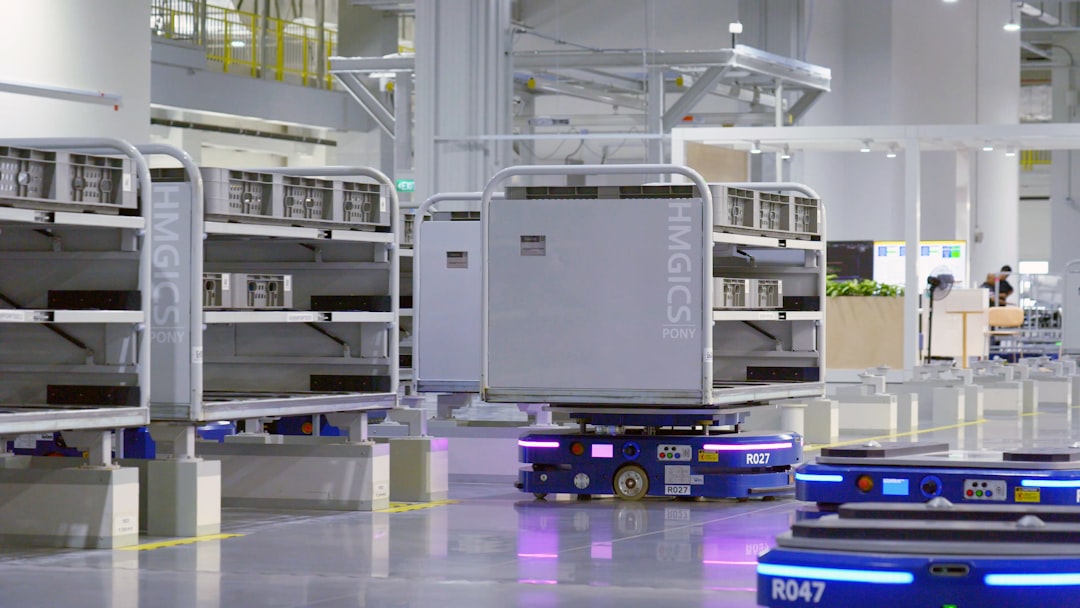
Modern warehouses increasingly operate with AI-powered robotics and automation systems. AI coordinates picking paths, assigns tasks dynamically, and manages storage placement based on demand velocity.
Automation systems use computer vision and machine learning to:
- Improve picking accuracy
- Optimize storage locations
- Reduce travel distances
- Accelerate order fulfillment cycles
Companies leveraging AI in warehouse operations frequently report 25–40% improvements in throughput while reducing labor strain and error rates.
5. Route Optimization and Dynamic Logistics Planning
Transportation inefficiencies represent significant cost drivers. AI-based route optimization tools analyze traffic conditions, fuel costs, delivery windows, and vehicle capacities in real time.
Unlike static route planning, AI systems dynamically reroute shipments when disruptions occur, reducing delays and fuel consumption. Benefits include:
- Lower transportation expenses
- Improved on-time delivery rates
- Reduced carbon footprint
In large logistics networks, even minor optimizations across thousands of deliveries translate into substantial performance gains.
6. Supplier Risk Assessment and Resilience Planning
Global supply chains face geopolitical uncertainty, natural disasters, and regulatory shifts. AI tools monitor news feeds, financial stability indicators, trade data, and weather reports to assess supplier risk continuously.
Instead of relying on periodic audits, AI provides:
- Early warning signals
- Risk scoring models
- Alternative supplier recommendations
- Scenario simulations
This capability strengthens resilience and reduces the impact of supply disruptions, contributing directly to improved operational continuity.
7. Real-Time Visibility and Control Towers
Supply chain control towers powered by AI deliver unified dashboards integrating data from ERP systems, IoT devices, transportation management tools, and warehouse systems.
AI enhances these platforms by identifying anomalies and recommending corrective actions rather than merely displaying data. Decision-makers gain:
- End-to-end visibility
- Faster response to disruptions
- Improved cross-functional coordination
This transition from reactive reporting to predictive control significantly improves agility and performance.

8. Automated Procurement and Smart Spend Analysis
AI-driven procurement systems analyze historical purchasing patterns, contract compliance, pricing trends, and supplier performance to optimize sourcing decisions.
Natural language processing (NLP) enables contract analysis, flagging inconsistencies and potential risks. Meanwhile, predictive models suggest optimal purchase timing based on commodity forecasts.
Organizations benefit through:
- Reduced manual processing time
- Improved negotiation leverage
- Lower procurement costs
- Better compliance oversight
Efficiency gains in procurement ripple across the supply chain ecosystem.
9. Demand Sensing and Short-Term Planning
While forecasting addresses long-term planning, AI-based demand sensing focuses on short-term demand fluctuations. By analyzing point-of-sale data, online browsing activity, and promotional signals, AI detects demand shifts earlier than traditional systems.
This enables rapid adjustments in:
- Production scheduling
- Inventory allocation
- Distribution priorities
Shortened response cycles help organizations remain competitive, particularly in retail and consumer goods sectors.
10. Sustainability and Carbon Footprint Optimization
Sustainability is no longer optional; it is strategically imperative. AI models evaluate transportation routes, packaging choices, supplier emissions data, and energy consumption patterns.
By optimizing these variables, AI supports:
- Reduced emissions
- Improved reporting accuracy
- Regulatory compliance
- Cost savings through energy efficiency
Organizations that integrate sustainability metrics into operational decision-making often find environmental efficiency and cost efficiency closely aligned.
Why AI Delivers a 34% Efficiency Improvement
The cumulative effect of these use cases explains how AI enables significant performance gains. The 34% efficiency improvement observed in AI-mature supply chains results from:
- Lower inventory carrying costs
- Reduced transportation waste
- Minimized downtime
- Enhanced labor productivity
- Improved demand forecasting accuracy
Importantly, these improvements are not isolated. They compound across functions. Improved forecasting enhances production planning. Better inventory management strengthens transportation efficiency. Enhanced supplier visibility reduces emergency sourcing costs. AI’s power lies in integration and systemic optimization.
Implementation Considerations
Although the benefits are substantial, successful AI deployment requires:
- High-quality, integrated data
- Cross-functional collaboration
- Change management leadership
- Scalable digital infrastructure
Organizations must prioritize governance and ethical oversight while ensuring transparency in AI-driven decisions. A phased implementation approach—starting with high-impact use cases such as demand forecasting or route optimization—often yields the fastest return on investment.
Conclusion
AI is redefining supply chain management from a cost-control function into a strategic, data-driven capability. By leveraging predictive analytics, automation, and intelligent optimization, companies can enhance resilience, reduce inefficiencies, and achieve up to 34% overall operational improvement.
The most successful organizations treat AI not as a standalone technology initiative but as a central component of enterprise strategy. As global supply chains grow increasingly interconnected and volatile, AI-powered decision-making will determine which businesses lead—and which struggle to keep pace.


