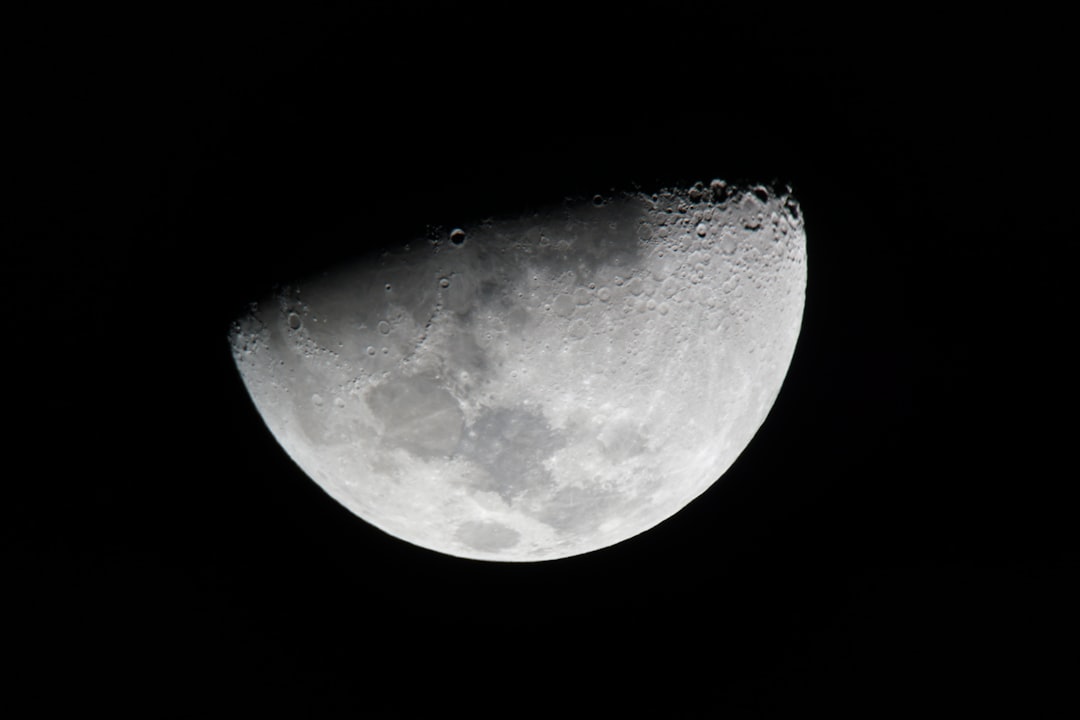
In recent years, private aerospace companies have rapidly transformed the space industry. Among the newer players making significant strides is Intuitive Machines, a Houston-based aerospace company focused on lunar exploration. Backed by NASA contracts and cutting-edge technology, Intuitive Machines has emerged as a crucial partner in the Artemis program, pushing the boundaries of lunar science and commercial spaceflight.
TL;DR
Intuitive Machines is revolutionizing lunar exploration through a series of NASA contracts and innovative space technology. The company is one of the key commercial providers delivering payloads to the Moon as part of NASA’s Artemis program. Their Nova-C lunar lander is central to several missions, enabling scientific research and infrastructure development on the lunar surface. With a unique blend of commercial agility and governmental collaboration, Intuitive Machines is playing a pivotal role in the new space economy.
What Is Intuitive Machines?
Intuitive Machines, LLC is a private, American aerospace company founded in 2013 in Houston, Texas, by Stephen Altemus, Tim Crain, and Kamal Ghaffarian. The founders brought with them decades of experience in NASA’s human spaceflight program and robotics. Focused primarily on lunar transportation, data services, and exploration, the company strives to create an economically sustainable path to the Moon and beyond.
Its flagship project, the Nova-C lunar lander, is designed to deliver multiple types of payloads to the lunar surface for both governmental and commercial customers. Intuitive Machines integrates both legacy NASA expertise and nimble startup culture, making it an effective innovator in a rapidly evolving industry.
NASA Contracts and CLPS Program
In 2018, NASA unveiled its Commercial Lunar Payload Services (CLPS) initiative—a bold program under Artemis aiming to contract private companies for delivering science and technology payloads to the Moon. Intuitive Machines was among the first companies awarded contracts under this initiative. The objective? To create a reliable, affordable lunar delivery service that fosters innovation through commercial solutions.
Notable NASA Contracts
- IM-1 Mission: Awarded in 2019, this initial $77 million contract tasks Intuitive Machines with delivering a series of scientific payloads to the lunar surface using its Nova-C lander.
- IM-2 and IM-3 Missions: These expanded contracts, each valued at over $90 million, will include additional payload deliveries, data gathering mechanisms, and even a drill system to probe lunar ice.

Each contract is not just a funding milestone but a validation of the company’s capabilities and reliability. As of 2024, NASA has entrusted more than $250 million in lunar delivery missions to Intuitive Machines, allocating multiple missions through at least 2026.
Nova-C Lander: The Backbone of Operations
At the heart of each lunar mission is Intuitive Machines’ Nova-C lander. This vehicle is roughly the size of a compact car and designed for autonomous touchdown on the Moon’s surface. What makes Nova-C particularly useful is its modular design and ability to carry diverse payloads, including instruments for scientific analysis and commercial technology demonstrations.
Key Features of Nova-C:
- Payload Capacity: Up to 100 kilograms of instruments and cargo.
- Propulsion: Uses liquid methane and liquid oxygen, a more sustainable and potentially reusable fuel system for lunar missions.
- Landing Accuracy: Autonomous guidance systems offering pinpoint landings on specific lunar locations.
Future versions of Nova-C may also support lunar mobility solutions or even deliver early infrastructure components for extended lunar habitation.
The Role in NASA’s Artemis Program
NASA’s Artemis program aims to return humans to the Moon and establish a sustainable presence there as a steppingstone to Mars. Intuitive Machines plays an essential role by delivering early testing equipment, scientific instruments, and technologies that can monitor the Moon’s surface and environment.
Through payloads such as regolith sampling tools, lunar radiation monitors, and mobile robotics systems, Intuitive Machines’ flights serve as the groundwork for future crewed missions. Reliable surface access is a prerequisite for building out infrastructure like habitats, power systems, and communication networks.
Image not found in postmetaThe partnership enhances both sides: NASA benefits from industry efficiency and cost-effectiveness, while Intuitive Machines gains engineering challenges, credibility, and further governmental support for technology development.
Collaborations and Industry Impact
Beyond NASA, Intuitive Machines has established industry partnerships that broaden its technological capabilities. These include organizations in telecommunications, robotics, and even entertainment. For example, in 2022 and 2023, Intuitive Machines collaborated with other aerospace contractors like SpaceX and Honeybee Robotics to prepare infrastructure for the lunar Gateway program.
The broader impact of such collaborations is substantial:
- Technology Sharing: Innovations in miniaturized sensors and robotics spill over into medical, logistics, and defense applications on Earth.
- Economic Growth: By enabling a private lunar supply chain, the company helps fuel the expanding space economy.
- STEM Development: Inspiring the next generation of scientists, engineers, and entrepreneurs in space exploration fields.
Companies like Intuitive Machines also serve as a proof point of how public-private partnerships are shaping the modern space economy—leaner, faster, but just as ambitious as the space programs of earlier decades.
Challenges Ahead
No space mission is without its hurdles. As of 2024, Intuitive Machines faces some challenges common in the aerospace sector.
Key Challenges Include:
- Launch Delays: Weather, technical readiness, and coordination with launch providers can postpone missions.
- Technological Complexity: Operating advanced autonomous systems on a distant, unforgiving lunar surface poses risks.
- Budget Constraints: While well-funded, delays often translate to cost overruns and logistical headaches.
That said, the company’s ability to secure multiple CLPS missions despite these hurdles speaks volumes about its engineering resilience and stakeholder confidence.
Looking to the Future: Lunar Economy and Beyond
Looking ahead, Intuitive Machines envisions a future where regular lunar transportation supports a thriving lunar economy. This would include mining operations, scientific research stations, and perhaps even space tourism hubs. The expansion of their operations might not stop at the Moon—talks of Mars exploration and orbital operations are also on the table.
The company is also developing communications networks tailored for lunar missions, a key step in enabling more complex robotic and human operations in remote space environments. Another frontier includes in-situ resource utilization (ISRU)—where materials from the lunar surface are used to support operations without reliance on Earth-bound supply lines.
Conclusion
In just over a decade, Intuitive Machines has transitioned from a Houston startup to a pivotal partner in America’s return to the Moon. With multiple high-stakes missions under its belt, and more on the horizon, the company stands as a symbol of the new era of space exploration—one where private innovation and public vision align to reach beyond earthly horizons.
As its Nova-C landers touch down on lunar soil, Intuitive Machines is not just delivering payloads—it’s delivering the future of space exploration.


